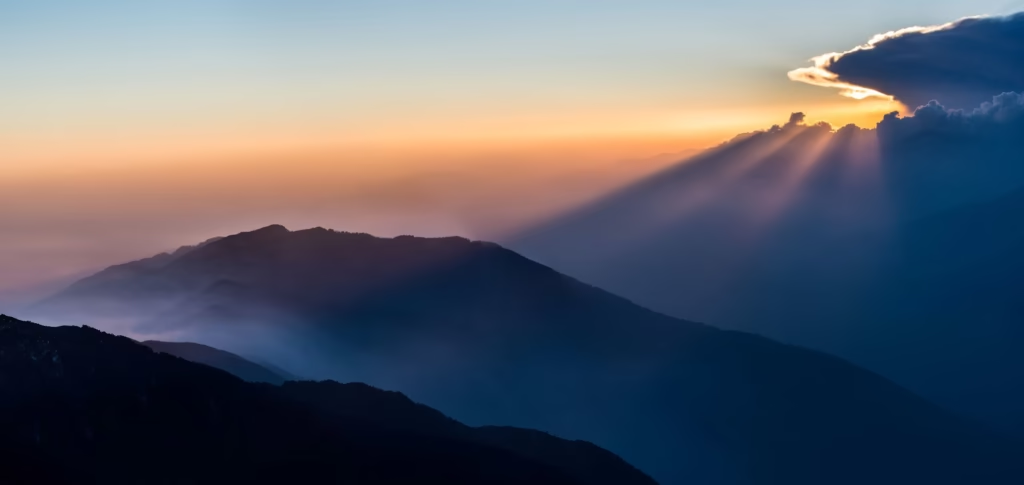
Nepal will offer several beginner-friendly summer treks that families can complete safely with proper pacing and preparation. The best options will combine lower altitude, reliable accommodation, manageable walking hours, and strong cultural experiences. Families traveling during summer (June ...
Nepal will offer several beginner-friendly summer treks that families can complete safely with proper pacing and preparation. The best options will combine lower altitude, reliable accommodation, manageable walking hours, and strong cultural experiences.
Families traveling during summer (June to August) will need to prepare for monsoon rain, slippery trails, leeches in forest sections, and occasional flight delays. However, summer will also bring greener landscapes, fewer crowds, cleaner mountain air after rainfall, and quieter trails.
This guide will help beginner families choose realistic trekking routes based on altitude, comfort, safety, budget, and children’s fitness levels.
How Families Should Choose a Beginner Trek in Nepal
Choose Lower Altitudes First
Altitude sickness will affect beginners unpredictably. Families should ideally stay below 4,000 meters during their first Nepal trek.
Safer beginner altitudes:
Under 3,500 m for young children
Under 4,000 m for healthy teenagers and adults
Prioritize Short Walking Days
Many families overestimate children’s endurance. In Nepal, steep stone staircases will exhaust beginners faster than expected.
Ideal daily walking time:
3–5 hours for children under 12
5–6 hours for teenagers
Avoid Overpacked Itineraries
The most common mistake beginners make will involve trying to “see everything” too quickly. Fatigue will reduce enjoyment and increase injury risk.
Hire a Licensed Guide
A guide will help families:
Navigate trail changes during monsoon
Monitor altitude symptoms
Arrange safer food and accommodation
Handle transport disruptions
1. Ghorepani Poon Hill Trek — Best Overall Beginner Family Trek
Why This Trek Will Work for Families
The Ghorepani Poon Hill Trek is one of the best summer treks in Nepal, which offers the safest balance of scenery, comfort, and manageable difficulty for first-time trekking families. Trails will pass through rhododendron forests, Gurung villages, terraced farms, and mountain viewpoints without reaching dangerous altitude levels.
Families will appreciate:
Reliable accommodation
Frequent rest stops
Moderate trekking distances
Lower altitude risk
Strong mobile coverage in many areas
The trail will stay busy enough that beginners rarely feel isolated.
Trek Overview
Detail
Information
Starting Point
Nayapul or Ulleri
Duration
4–6 days
Maximum Altitude
3,210 m
Daily Walking
4–6 hours
Difficulty
Easy
Why This Trek Will Work For Your Family
Ghorepani Poon Hill will deliver the perfect introduction to Himalayan trekking without overwhelming first-timers. The circuit features well-maintained stone staircases, frequent villages with medical facilities, and the shortest acclimatization curve among Nepal’s popular treks.
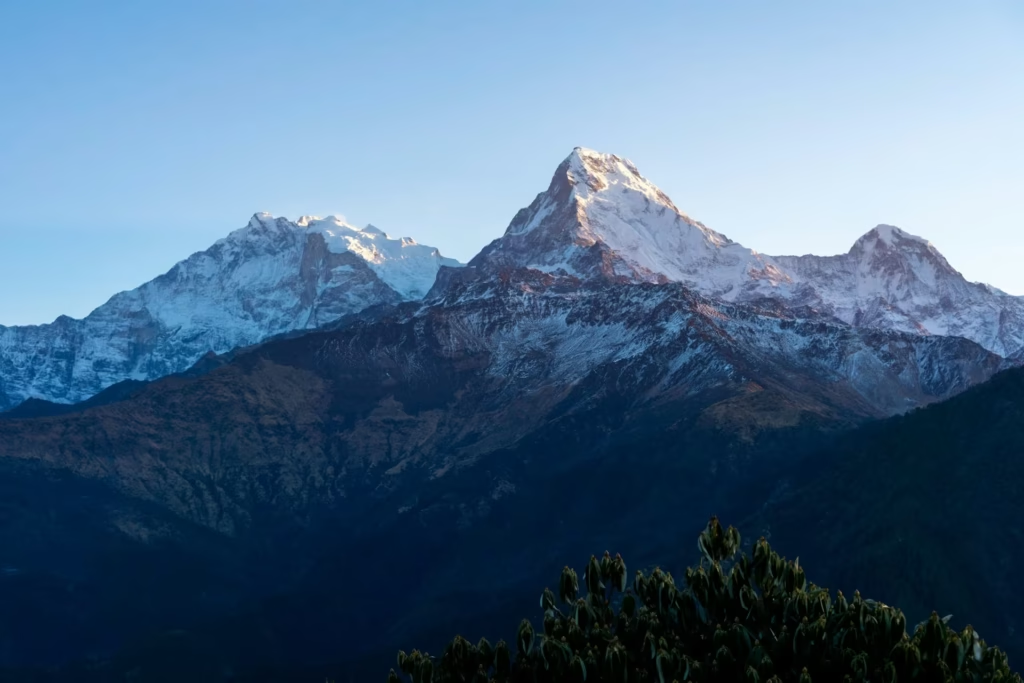
You will start from Nayapul (1,070m) and ascend through rhododendron forests to Ghorepani village. The pre-dawn hike to Poon Hill will reward your family with 360-degree panoramas of Dhaulagiri, Annapurna South, Machapuchare, and Nilgiri ranges—weather permitting.
Practical Logistics Breakdown
Access: 90-minute drive from Pokhara to Nayapul trailhead
Accommodation: 15+ teahouses per village with attached bathrooms available
Food Safety: High turnover ensures fresh ingredients; stick to cooked meals
Medical Access: Ghorepani has basic health post; evacuation possible via jeep to Pokhara within 4 hours
Mobile Coverage: Ncell and Nepal Telecom work in major villages
Common Mistakes Families Make
Parents often underestimate the 3,000+ stone steps between Tikhedhunga and Ghorepani. Your children will struggle with knee strain during descent. Bring trekking poles for everyone, not just adults. Many families skip the 4:00 AM Poon Hill sunrise due to tired children—this eliminates the trek’s primary highlight. Prepare kids mentally beforehand.
What Families Will Experience
Children will often enjoy:
Suspension bridges
Village interactions
Farm animals
Forest trails
Sunrise from Poon Hill
Adults will value:
Comfortable lodges with attached bathrooms in some villages
Predictable logistics
Easier evacuation access if needed
Summer conditions will create lush green hills and dramatic cloud movement around Annapurna and Dhaulagiri.
Important Challenges
The Ulleri staircase section will surprise many beginners. Thousands of steep stone steps can become slippery during the monsoon.
Families should:
Use trekking poles
Start early in the morning
Carry rain covers
Avoid rushing uphill
2. Langtang Valley Trek — Best for Families Wanting a Longer Adventure
Why Langtang Will Suit Active Families
Langtang Valley will provide a more immersive Himalayan trekking experience without the extreme altitude of Everest region trekking. The route will combine mountain scenery, Tamang culture, yak pastures, and glacier views.
This trek will suit:
Families with teenagers
Parents seeking quieter trails
Travelers wanting deeper cultural experiences
Trek Overview
Detail
Information
Starting Point
Syabrubesi
Duration
7–9 days
Maximum Altitude
3,870 m
Daily Walking
5–7 hours
Difficulty
Moderate
Why Your Family Will Appreciate This Route
Langtang Valley will offer the closest mountain experience to Kathmandu (only 7 hours by bus to trailhead). You will walk through Tamang Buddhist villages largely rebuilt after the 2015 earthquake, creating meaningful conversations about resilience with older children.
The trail follows the Langtang Khola river through bamboo and rhododendron forests before opening into the high glacial valley. Your family will acclimatize gradually with minimal altitude risk if you follow the recommended itinerary.
Village-By-Village Breakdown
Syabrubesi to Lama Hotel (2,380m): Gentle 5-hour walk through forests with red panda habitat (rarely spotted). Multiple river crossings on suspension bridges will excite younger trekkers.
Lama Hotel to Langtang Village (3,430m): Steeper sections require stamina. The village reconstruction provides educational opportunities about earthquake recovery. Your children will interact with yak herders and learn about traditional cheese production.
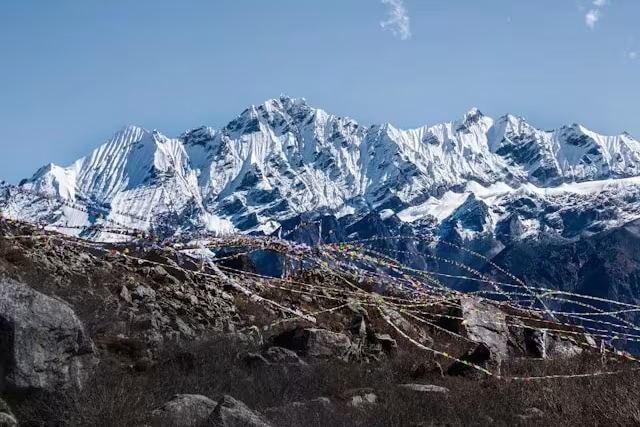
Langtang Village to Kyanjin Gompa (3,800m): The valley widens dramatically. You will reach the trek’s spiritual and scenic climax at this ancient monastery surrounded by peaks above 7,000m.
Altitude Acclimatization Strategy
Your family will spend two nights at Kyanjin Gompa. Use day two for the Kyanjin Ri viewpoint hike (4,773m) or Tserko Ri (4,984m) if your family demonstrates strong acclimatization. Children should ascend slowly, drink 3+ liters of water daily, and descend immediately if headaches persist beyond mild discomfort.
What Makes Langtang Special
The Langtang valley will feel more remote than Poon Hill while still offering:
Established teahouses
Homemade meals
Strong local hospitality
Scenic alpine landscapes
Families will encounter:
Buddhist monasteries
Prayer flags
Yak cheese factories
River valleys
Forest wildlife
Summer rainfall will make the forests intensely green.
Hidden Challenges Families Should Expect
Road travel to Syabrubesi will feel rough and slow. Children prone to motion sickness may struggle during the drive from Kathmandu.
Another common issue will involve underestimating cold temperatures at night. Even during summer, temperatures at Kyanjin Gompa can become uncomfortable without proper sleeping layers.
Families should pack:
Waterproof jackets
Thermal layers
Quick-dry clothing
Water purification tablets
3. Mardi Himal Trek — Best Scenic Ridge Trek for Beginners
Why Families Will Like Mardi Himal
Mardi Himal Trek will deliver dramatic mountain scenery with shorter overall trekking days compared to Annapurna Base Camp. The trail will stay relatively peaceful even during busy travel periods.
This trek will work best for:
Families with moderately fit children
Nature-focused travelers
Photographers
Trek Overview
Detail
Information
Starting Point
Kande
Duration
5–7 days
Maximum Altitude
3,580 m
Daily Walking
4–6 hours
Difficulty
Easy-Moderate
Mardi Himal will challenge your family more than Ghorepani but rewards with solitude and dramatic high-altitude scenery. This trek opened commercially only in 2012, meaning you will encounter 70% fewer trekkers than Annapurna Base Camp.
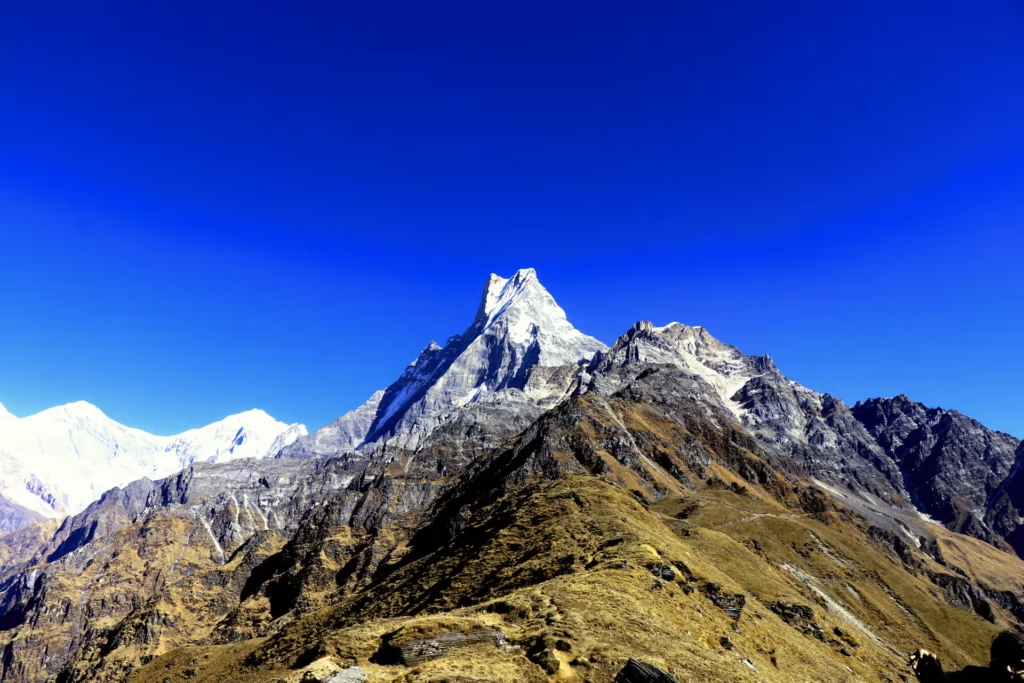
The route diverges from the main Annapurna trail at Dhampus, ascending through dense forests that provide natural rain protection during summer monsoons. The final approach to base camp will position your family directly beneath Machapuchare’s sacred peak—Nepal’s most photographed mountain.
Day-By-Day Physical Demands
Days 1-2 (Forest Camp/Low Camp): Moderate climbing with good trail conditions. Your teenagers will manage without difficulty.
Day 3 (High Camp, 3,580m): The steepest section. Prepare for 6-7 hours of ascent. Your family will emerge above treeline where exposure increases. Wind chill becomes significant—layering systems become essential.
Day 4 (Base Camp Push): You will start at 3:00 AM for sunrise at base camp. The pre-dawn cold will test your family’s mental toughness. This section includes steep scree slopes requiring careful foot placement.
When This Trek Won’t Work
Families with children under 12 will struggle with the altitude gain rate—you will climb from 1,500m to 4,500m in just three days. This violates conservative acclimatization guidelines. Additionally, High Camp and Base Camp offer limited teahouse options (2-3 lodges), meaning no backup if accommodation quality disappoints.
Emergency Considerations
Helicopter evacuation from High Camp costs $3,000-5,000 USD. Your travel insurance must explicitly cover trekking up to 5,000m. Mobile coverage disappears above Low Camp. Carry a satellite communicator (rentable in Pokhara for $5-8/day) for genuine emergency backup.
What the Trail Will Feel Like
The route will climb gradually through:
Dense forest
Moss-covered trails
Ridge paths
Small mountain lodges
Families will repeatedly see:
Machhapuchhre (Fishtail Mountain)
Annapurna South
Hiunchuli
Cloud movement during summer will create dramatic mountain views between rain showers.
Important Realities Beginners Should Know
Accommodation on Mardi Himal will feel simpler than on Poon Hill. Some lodges will have:
Shared toilets
Limited hot water
Weak electricity
Basic menus
Children who require highly predictable meals may struggle after several days.
Parents should carry:
Snacks from Pokhara
Electrolyte powders
Wet wipes
Extra socks
Leeches may appear on lower forest trails during monsoon. Families should wear long socks and avoid stopping in wet grass.
4. Australian Camp and Dhampus Trek — Best Short Trek for Young Children
Why This Trek Will Be Ideal for First-Time Families
Families traveling with children under 10 will often find longer treks physically and emotionally overwhelming. The Australian Camp and Dhampus route will provide a gentle introduction to trekking without exhausting younger hikers.
This short trek will focus more on:
Mountain views
Village life
Easy walking
Family comfort
Trek Overview
Detail
Information
Starting Point
Kande
Duration
2–3 days
Maximum Altitude
2,100 m
Daily Walking
2–4 hours
Difficulty
Very Easy
Pikey Peak delivers Everest panoramas without the Khumbu region’s altitude stress or expense. Sir Edmund Hillary declared this viewpoint offered Nepal’s best mountain vista, you will see Everest, Lhotse, Nuptse, Makalu, Kanchenjunga, and Numbur Himal from the summit.
The trek begins from Dhap (2,850m), providing significant altitude advantage over Lukla-based routes. Your family will walk through Sherpa villages practicing traditional Buddhism without the commercialization affecting Namche Bazaar.
Cultural Learning Opportunities
You will stay in homestays rather than standard teahouses in villages like Junbesi and Thupten Chholing. Your children will participate in daily Sherpa life, helping with yak herding, observing butter lamp preparation, and learning basic Sherpa phrases. This immersion creates more meaningful family memories than simply viewing mountains.
The Monsoon Reality
Summer fog obscure Everest views 60-70% of mornings. Your family must accept this probability. However, the cultural experience and rhododendron forests in full bloom will compensate. Lower expectations about guaranteed mountain views will prevent disappointment.
Logistical Complications
Access requires a 7-8 hour jeep ride from Kathmandu on deteriorating roads. Children prone to motion sickness will suffer. The road conditions will worsen during monsoon—budget extra time for landslide delays. Some families will fly to Phaplu (30 minutes) instead, adding $180-220 per person but eliminating road stress.
Family-Friendly Advantages
The trail will stay close to Pokhara, making logistics much simpler.
Families will benefit from:
Short transport times
Comfortable lodges
Lower altitude
Easier emergency access
Children will usually enjoy:
Open hill views
Farm terraces
Village dogs and goats
Short walking distances
Parents nervous about altitude sickness will find this trek reassuring because elevation remains relatively low.
Common Beginner Mistakes
Some travelers will mistakenly treat this as “just a walk” and arrive without proper rain protection. Summer storms can arrive suddenly.
Families should still bring:
Waterproof jackets
Proper hiking shoes
Sun protection
Reusable water bottles
Another issue will involve unrealistic expectations about luxury accommodation. Guesthouses will remain simple despite the trek’s popularity.
5. Helambu Trek — Best Quiet Cultural Trek Near Kathmandu
Why Helambu Will Appeal to Families
Helambu Trek will offer a quieter alternative to the crowded Annapurna region. Located north of Kathmandu, this trek will combine forests, Buddhist culture, and moderate altitude.
Families wanting:
Fewer tourists
Shorter travel logistics
Cultural immersion
Gradual trekking
Trek Overview
Detail
Information
Starting Point
Sundarijal
Duration
5–8 days
Maximum Altitude
3,650 m
Daily Walking
4–6 hours
Difficulty
Easy-Moderate
Why Sustainable Trekking Matters
Khopra Ridge will teach your family about responsible tourism. This community-owned lodge system ensures your spending directly benefits local Gurung and Magar villages. Your children will learn how tourism can support education and healthcare in remote regions.
The trek combines elements of Ghorepani (similar forests and villages) with the solitude of Mardi Himal. You will reach viewpoints of Dhaulagiri, Annapurna South, and Nilgiri without encountering large trekking groups.
The Khayer Lake Side Trip
From Khopra Ridge, your family can attempt the sacred Khayer Lake (4,660m). This challenging day hike adds 6-8 hours but will provide high-altitude experience without overnight camping. Many families will skip this option—only attempt if your children demonstrated strong performance during the approach days.
Community Lodge Experience
Khopra Community Lodge offers the trek’s only accommodation at ridge level. You will encounter basic facilities—shared bathrooms, solar-heated showers (when sunny), and limited menu options. This rustic experience teaches children about privilege and resourcefulness.
Realistic Expectation: The lodge accommodates 30-40 trekkers maximum. During summer’s low season, you might represent the only guests. Some children will find this isolation uncomfortable; others will embrace the wilderness immersion.
Weather Variables
Ridge exposure means you will experience wind chill even during summer. Afternoon thunderstorms can delay ridge arrival by hours. Carry adequate rain gear and warm layers. The trail includes exposed sections where lightning poses genuine risk—guides will make conservative decisions about waiting out storms.
What Families Will Experience
The route will pass through:
Sherpa villages
Monasteries
Pine forests
Rice terraces
Suspension bridges
Compared with Everest or Annapurna, Helambu will feel calmer and less commercialized.
Summer conditions will create misty forests and greener hillsides.
Important Considerations
Monsoon rainfall can occasionally damage sections of trail or roads near Kathmandu. Families should keep flexible schedules instead of booking tightly connected flights afterward.
Accommodation quality will vary significantly between villages. Some lodges will feel comfortable while others remain basic.
Parents should prepare children for:
Squat toilets
Cold showers
Limited Wi-Fi
Occasional power cuts
Food Safety and Hygiene Tips for Families
Safest Foods to Eat on Treks
Recommended:
Dal bhat
Fried rice
Vegetable noodles
Boiled potatoes
Omelets
Freshly cooked soups
Avoid:
Raw salads
Unpeeled fruit
Undercooked meat
Unfiltered water
Water Safety
Families should never drink untreated tap water.
Best options:
Water purification tablets
UV purifiers
Filter bottles
Boiled water from lodges
Altitude Sickness: What Beginner Families Must Know
Early Symptoms
Watch for:
Headache
Nausea
Loss of appetite
Dizziness
Unusual fatigue
Important Family Safety Rule
Children may hide symptoms because they fear ending the trek early.
Parents should monitor:
Mood changes
Reduced energy
Appetite loss
Walking pace
If symptoms worsen, families should descend immediately.
Budget Breakdown for Family Treks in Nepal
Expense
Estimated Cost
Guide
$25–40 per day
Porter
$20–30 per day
Teahouse Room
$5–20
Meals
$5–10 each
Trek Permits
$20–50
Private Transport
Variable
Families should carry cash because ATMs will not exist on most trails.
Essential Packing List for Summer Family Treks
Clothing
Waterproof jacket
Fleece layer
Quick-dry shirts
Trekking pants
Warm hat
Hiking socks
Health Items
Personal medications
Oral rehydration salts
Water purification tablets
Sunscreen
Insect repellent
Trekking Gear
Trekking poles
Headlamp
Rain cover
Reusable water bottles
Small backpack
Best Time During Summer for Family Trekking
Early June
Advantages:
Fewer crowds
Greener landscapes
Better mountain visibility before heavier monsoon
Late August
Advantages:
Cleaner air after rainfall
Fresh vegetation
Less dust
Avoid peak monsoon storm periods in mid-July if traveling with very young children.
Frequently Asked Questions
Which trek in Nepal will suit beginners with children?
Ghorepani Poon Hill Trek will usually suit beginner families best because it combines moderate walking distances, comfortable lodges, and lower altitude risk.
Will children get altitude sickness in Nepal?
Yes. Children can develop altitude sickness just like adults. Families should avoid rapid ascents and monitor symptoms carefully.
Is summer trekking safe in Nepal?
Summer trekking will remain safe on beginner routes with proper preparation. Families should expect rain, slippery trails, and occasional transport delays.
What age will children need for trekking in Nepal?
Many children aged 6 and above will complete short beginner treks successfully if itineraries remain realistic and flexible.
Will food be safe during trekking?
Freshly cooked meals in established teahouses will generally remain safe. Families should avoid raw foods and untreated water.
Should families hire guides in Nepal?
Yes. Guides will improve safety, logistics, communication, and emergency response during beginner family treks.
Conclusion
The best beginner family treks in Nepal will prioritize manageable altitude, realistic walking days, and reliable accommodation instead of extreme mountain goals. Families who choose shorter itineraries, travel with flexibility, and prepare carefully for monsoon conditions will usually enjoy a far safer and more rewarding experience.
For most first-time visitors, Ghorepani Poon Hill will provide the strongest overall balance of scenery, comfort, and beginner accessibility. Families wanting deeper mountain immersion can then progress toward Langtang or Mardi Himal in future trips.
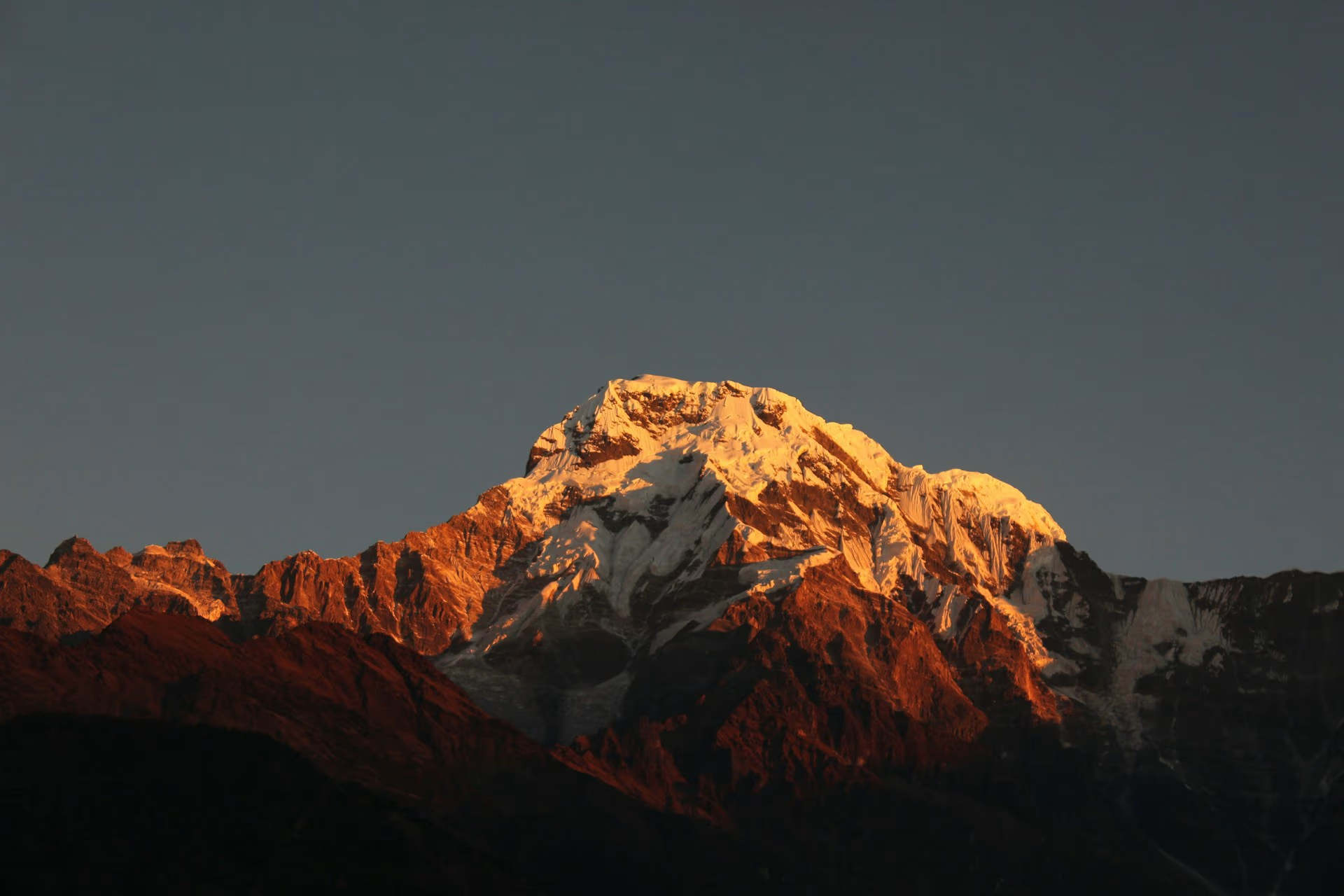
Nepal will offer several beginner-friendly summer treks that families can complete safely with proper pacing and preparation. The best options will combine lower altitude, reliable accommodation, manageable walking hours, and
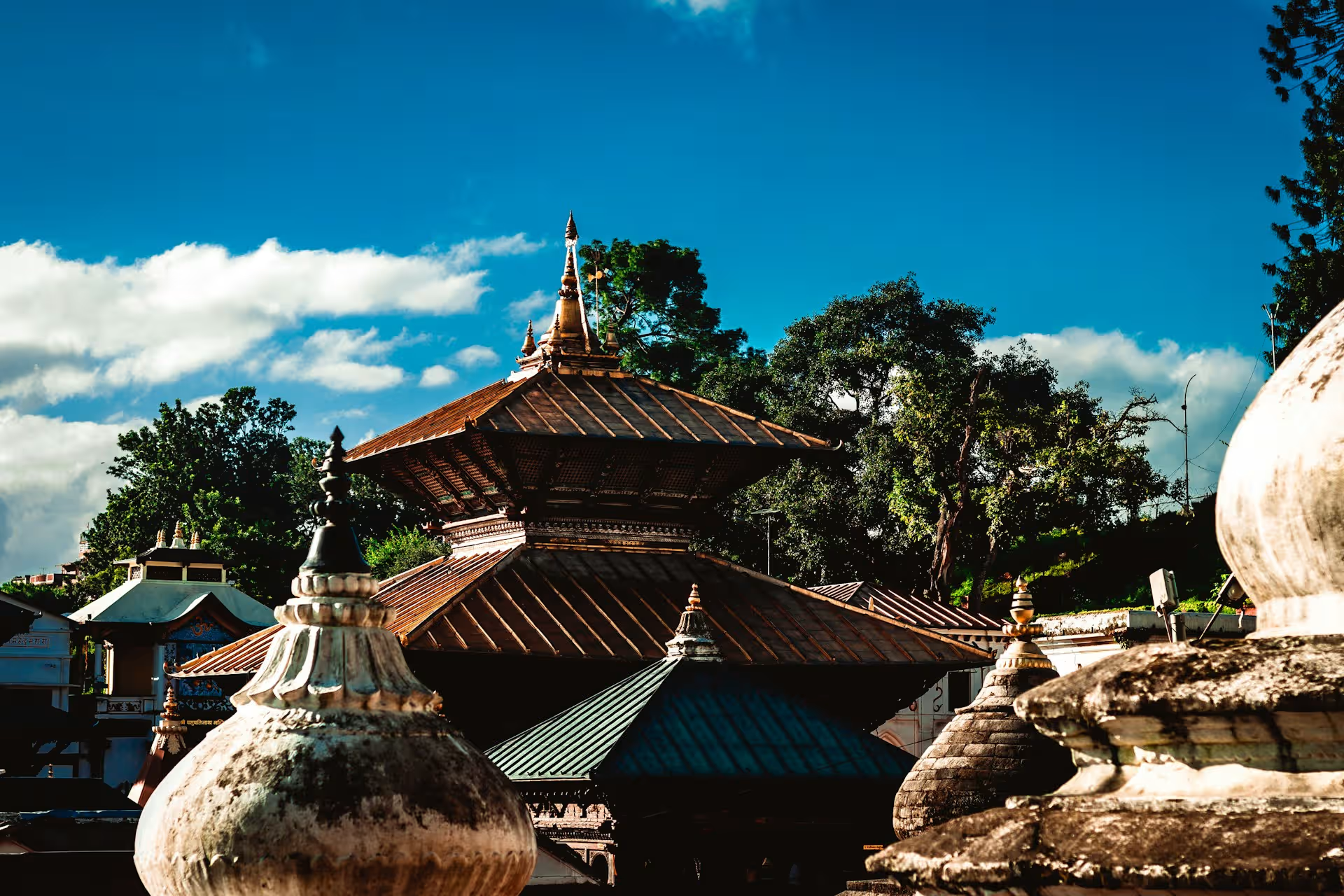
Pashupatinath Temple stands as Nepal’s most important Hindu temple dedicated to Lord Shiva and one of the most sacred pilgrimage sites in South Asia. Located on the banks of the
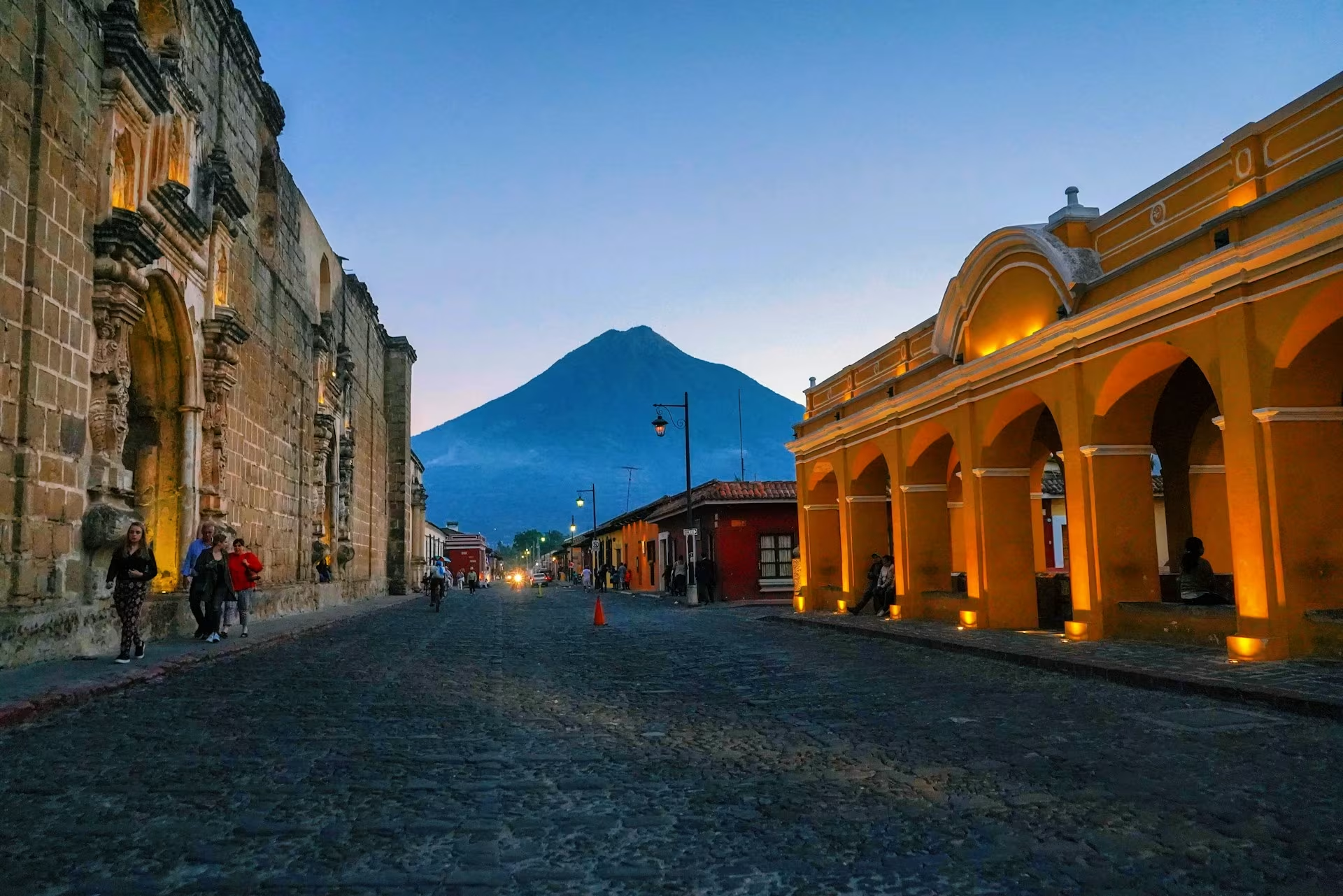
Known as the ‘Land of Eternal Spring,’ Guatemala is a haven for global travelers. However, it does not mean that the country has a Spring-like climate all round the year.
To provide the best experiences, we use technologies like cookies to store and/or access device information. Consenting to these technologies will allow us to process data such as browsing behavior or unique IDs on this site. Not consenting or withdrawing consent, may adversely affect certain features and functions.
Functional
Always active
The technical storage or access is strictly necessary for the legitimate purpose of enabling the use of a specific service explicitly requested by the subscriber or user, or for the sole purpose of carrying out the transmission of a communication over an electronic communications network.
Preferences
The technical storage or access is necessary for the legitimate purpose of storing preferences that are not requested by the subscriber or user.
Statistics
The technical storage or access that is used exclusively for statistical purposes.The technical storage or access that is used exclusively for anonymous statistical purposes. Without a subpoena, voluntary compliance on the part of your Internet Service Provider, or additional records from a third party, information stored or retrieved for this purpose alone cannot usually be used to identify you.
Marketing
The technical storage or access is required to create user profiles to send advertising, or to track the user on a website or across several websites for similar marketing purposes.